
Traditional Kerala Mural Friezes and Temple Architecture
June 25, 2026Admin
READING
Traditional Kerala Mural
Friezes and Temple Architecture
Explore how long horizontal border murals, known as friezes, narrate classic mythological tales like the playful antics of Lord Krishna to elevate interior and temple spaces
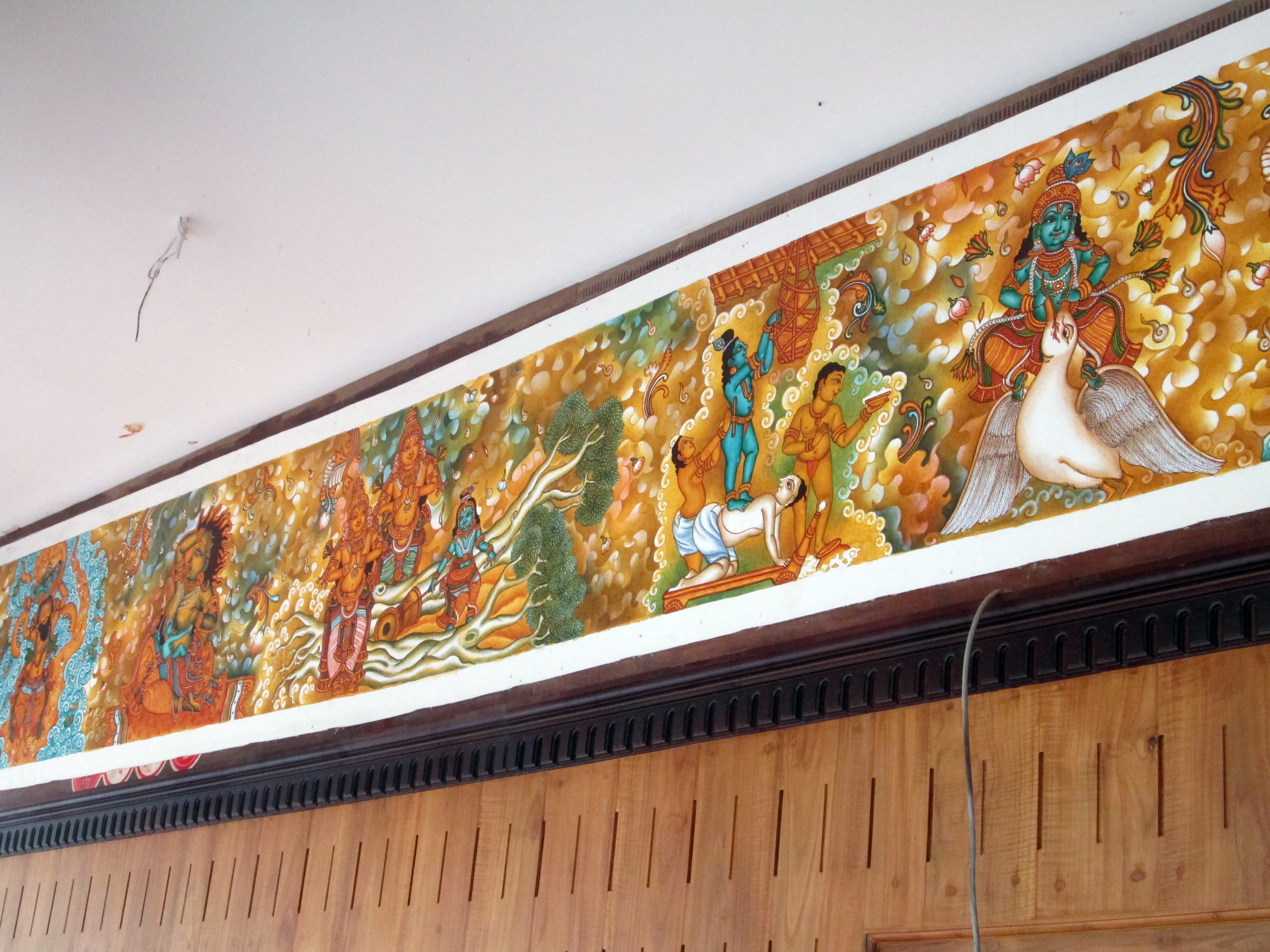
In traditional Kerala architecture, every available surface above eye level serves as a canvas for the divine. Frieze paintings—long, continuous horizontal panels typically positioned just below the ceiling—are designed to take viewers on a visual, chronological journey through sacred lore. As captured in IMG_2370 - Copy.jpg, this beautiful installation seamlessly flows along the upper wall border, turning an architectural beam into an unfolding storyboard of classical stories and legendary playfulness.
The Playful Tales of Balakrishna and Celestial Vahanas
This particular horizontal mural beautifully captures the playful spirit of Lord Krishna's childhood stories (Krishna Leela). Near the center, a well-loved narrative unfolds: the young, blue-hued Krishna is depicted stealing butter, cleverly climbing onto the back of a friend who is down on all fours to reach a hanging butter pot (Uri). To the right, another distinct panel showcases a green-complexioned deity majestically riding a white swan (Hamsa), surrounded by billowing golden clouds and floral creepers. By utilizing the classic Panchavarna palette against the natural warmth of wooden paneling below, this style of layout highlights how narrative rhythm and architectural design merge perfectly in the Kerala tradition.
"Art is not what you see, but what you make others see. The mural paintings of Kerala are a testament to this profound truth."
Share this article
Back to Magazine